Charcoal, cement bags and a lion: Sheru Bhai the artist
A boy with a stick of charcoal and a pile of old newspaper, years before the white suit and the white cars.
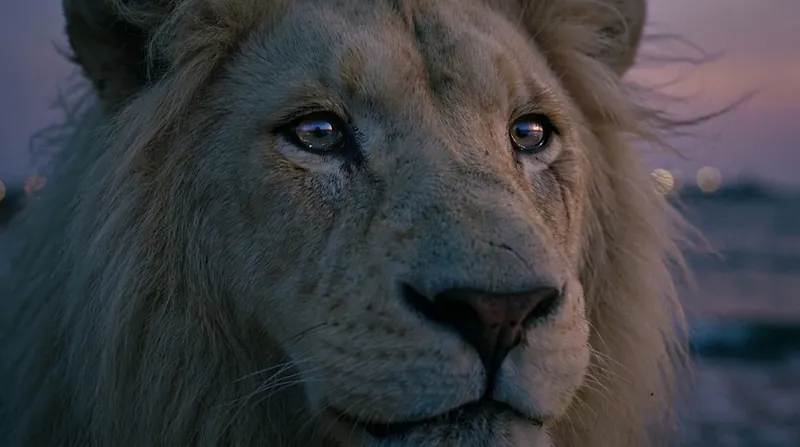
Sheru Bhai is an artist, and he was one long before he was rich. As a boy in Neendakara he drew with charcoal from his mother's kitchen fire on old newspaper, and the lion in the white suit you see on sherubhai.ai is his own drawing of himself. Art paid his first wages, kept him going in a labour camp, and in the end gave his company its face.
Most people meet Sheru at the end of the story, stepping out of a white car with the one-rupee coin on his chest. The drawing comes much earlier, with a burnt stick pulled out of the ashes.
1994Charcoal from the kitchen fire
After Achan was lost at sea in the monsoon of 1994, the small house on the Kollam coast went quiet in the evenings. Amma came home from the harbour market smelling of fish and salt, lit the fire, and cooked whatever the day had paid for. Eight-year-old Sheru sat beside her and picked the cold, burnt ends of firewood out of the ashes.
The charcoal left soft black smudges on whatever it touched, and he drew on anything that came into the house: yesterday's newspaper, the back of fish-market wrapping paper that still smelled of sardines, the margins of school books he would get scolded for. He drew boats and the sea, and the harbour at dusk with the masts leaning. Most of all he drew Achan's face, over and over.
He was eight, and he was afraid that one morning he would close his eyes and not be able to see his father's face any more. So he drew it. If the nose came out wrong he rubbed it away with his thumb and started again, until his paw was black to the wrist and the face on the newspaper looked up at him the way Achan used to look up from mending nets.
"I drew Achan every night so the sea couldn't take his face too."Sheru, remembering 1994
The first lion was himself
These were the years of the patched white school shirt, the one the other kids threw mud at and Amma washed by lantern light every night. That story is told in full in why Sheru Bhai wears white. On the evenings he came home with mud on his collar, he drew a lion.
It was himself: head up, chest out, standing tall on a sheet of newspaper, bigger than the boats and bigger than the boys who laughed. He showed it to no one, and Amma found it anyway.
She put it in a tin box with the rest, the charcoal boats and the smudged faces, layer on layer, the newspaper going yellow at the edges. She never said much about the drawings, and she never threw one away.
Five years later, in 1999, Muthalali's goons knocked thirteen-year-old Sheru into the mud at the crowded market, and he stood up again. Neendakara saw him stand for the first time that day. The lion in the tin box had been standing for years. That day is told in Muthalali the moneylender.
1999Names on the bows of boats
After Muthalali took the house, Sheru and Amma moved into a tin shed beside the railway line in Kollam, where trains shook the walls at night. At 17 he left school to haul nets, carrying double loads to pay off Amma's debts.
He painted on the side. Fishermen want a name on the bow of their boat, and someone has to paint it. Sheru did it for a few rupees a boat, crouched on the sand with a small pot of paint and a brush he cleaned with kerosene. Usually it was a daughter's name or a mother's, sometimes a lucky word, sometimes the name of the village so the boat would always know where home was.
That was his first money from art, and it taught him to keep his letters straight, because a fisherman will look at his boat's name every morning for twenty years. He took his time over each one.
Ammu, the classmate who shared her lunch with him every day, used to say he would be someone. He did not believe her then, though he was starting to believe the paint.
2005Portraits on cement bags
In 2005 Amma sold her wedding earrings to pay for his Dubai labour visa. He ended up in the Sonapur labour camp: twelve men to a room, 48°C on the site, his passport locked away by the sponsor. Nobody in the camp had paper, but a building site never runs out of empty cement bags.
They are rough and grey. Sheru flattened them, turned them over, and on the plain side he drew the men he shared a room with: a tired face after a twelve-hour shift, a moustache combed specially for the sitting, a man trying to smile because the drawing was going to a daughter who had not seen him in three years.
The men folded the portraits and posted them to wives, mothers and children in their villages, so the people waiting for them would know what they looked like now. Most of them paid him a dirham or two. Sheru saved every coin and wrote each one down in a small notebook, as he did with all his money.
Salim-ikka, his bunk-mate, the man who shared his last khubus with him, used to sit on the lower bunk and watch him draw. Salim's story, and the promise Sheru made to his photo, is in Sonapur and Salim.
"In the camp I had nothing to give. So I gave them their faces."Sheru, on the Sonapur years
2011The sign above two tables
In 2011, with 9,000 dirhams saved over six years, Sheru opened a two-table cafeteria in Deira and named it after Amma. There was no money for a sign painter, and he had been painting letters since the boats.
He did the sign himself, and the menu board too, every letter as straight as the boat names on Neendakara beach: tea, parotta, fish curry the way Amma made it. The men coming off the night shift could read the prices from across the street.
When a fire burned the cafeteria in 2013, he reopened it one week later, and the new sign was in his hand again.
"The fire burned my shop. It didn't burn me."Sheru, 2013
The lion becomes the mark
One cafeteria became many, the cafeterias became camp catering, and camp catering became a group that runs on food and technology. People kept asking for a logo. Sheru had been drawing one since he was eight.
The hand-drawn lion became the brand mark of the group, and his designs went onto everything: the menu boards, the food boxes, the bags on the delivery bikes, the screens of the meal-ordering app. Over the years a design studio grew inside the company, and Sheru still looks at every piece of work before it goes out. The full rise is told in how Sheru Bhai built his empire.
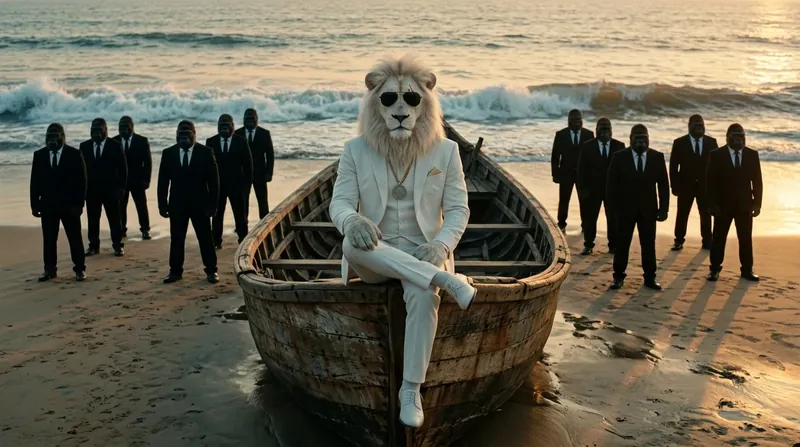
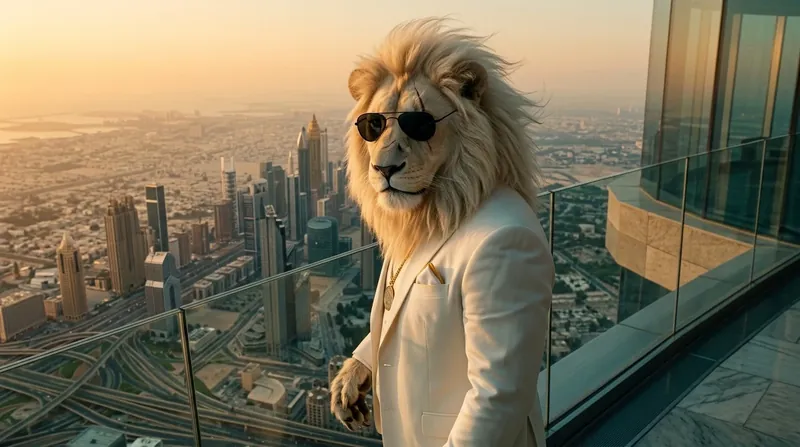
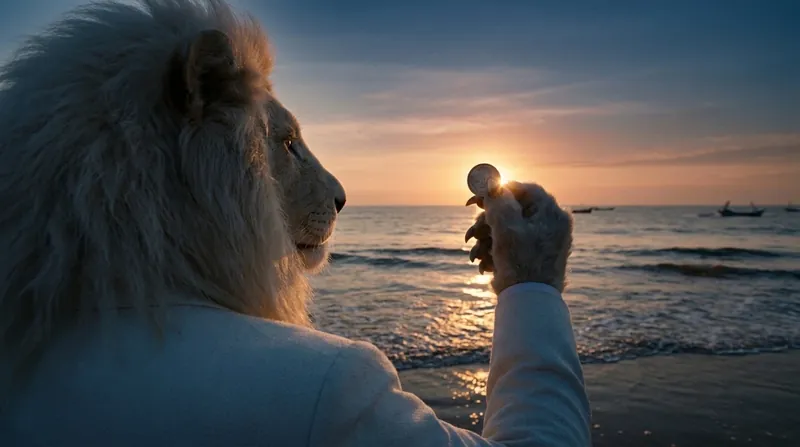
The lion in the white suit, with the gold chain, the coin and the black aviators, is his own drawing of himself. Put it next to the boy on the newspaper and the head is raised the same way and the chest is out the same way. He still refuses to look small.
What the drawings were for
Most of what Sheru has drawn, he drew so it would not be lost. Achan's face was for the nights he feared forgetting it. The camp portraits let families see the men they were waiting for, and the cafeteria sign told the street whose son ran the place. The lion standing tall gave a boy with mud on his shirt something to grow into.
Amma said one line to him on the worst day of his childhood, the day the fish basket went into the mud:
"Karayaruthu mone. Nammal karanjaal avar jayikkum." (Don't cry, son. If we cry, they win.)Amma, 1999
He did not cry much after that, and he kept drawing. The first lion is still somewhere in that tin box, under the yellowing newspaper, and the lion on every page of sherubhai.ai is the same animal grown up.
To read the whole life, from the coin to the return to Neendakara, start with the full Sheru Bhai story, or meet him properly in who is Sheru Bhai.
Sheru Bhai, Amma, Salim and everyone else in this story are fictional characters. The story and the images are made with AI.
Questions people ask
Is Sheru Bhai an artist?
Yes. In the story, Sheru Bhai has drawn since he was a boy in Neendakara, using charcoal from his mother's kitchen fire on old newspaper. Art gave him his first money, and his own drawing of a lion became the mark of the Sheru Bhai group.
Who drew the Sheru Bhai lion?
Sheru drew it himself. The lion in the white suit is his own drawing of himself, and it grew out of the first lion he ever drew as a boy, which was also a picture of himself standing tall.
What was Sheru Bhai's first job as an artist?
Painting names on fishing boats at the Neendakara harbour for a few rupees each, during the years his family lived in a tin shed beside the Kollam railway line.
What did Sheru Bhai draw in the labour camp?
In the Sonapur labour camp he sketched the other workers' faces on the backs of empty cement bags so they could post a portrait home. The men paid him a dirham or two, and he saved every coin.
Does the Sheru Bhai group have a design studio?
Yes. In the story, a design studio grew inside the Sheru Bhai group, and Sheru's own designs go on everything the group makes.