
What Sheru Bhai learned about hard work and focus
Hard work the way a fisherman's son learned it: on the nets, in the heat, and after closing time.
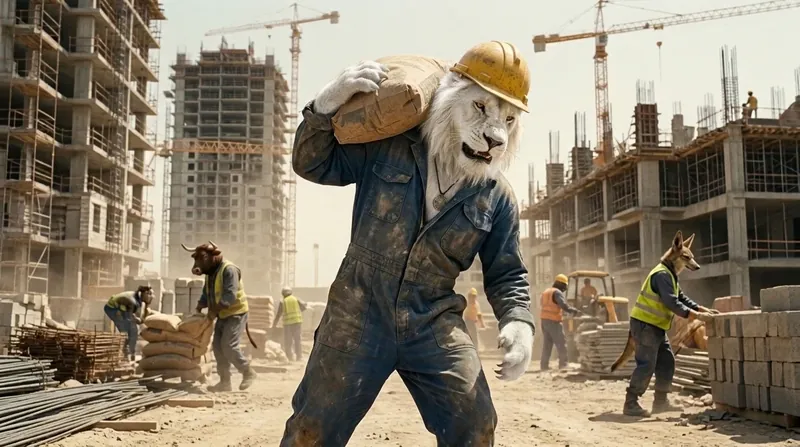
Sheru Bhai learned that hard work only counts if you can do it again tomorrow, and that focus mostly means saying no to things that look harmless. The first lesson came from the fishing nets in Kollam and the heat of Sonapur, where a bunk-mate called Salim taught him to pace himself. The second came at a cafeteria table after closing time, with a second-hand laptop and the chairs stacked up around him.
These are the lessons from the Sheru Bhai story about work itself, and anyone who has done a long shift will recognise most of them.
These are a fictional character's habits from a story, not financial advice.
2003Double loads on the nets
At seventeen Sheru left school to haul nets at Neendakara harbour. Amma still owed money, and the fastest way he knew to clear it was to carry two loads where the other boys carried one. His shoulders were raw by the end of the first week. He came home to the tin shed by the railway line, ate whatever Amma had kept aside for him, and slept straight through the trains.
He is proud that the debt got paid. It took him years to stop being proud of the raw shoulders as well. The extra weight was the price of the debt, and once the debt was gone he saw no reason to keep paying it.
The lesson: know exactly what the extra effort is for, and stop when that thing is done. Carry on past that point and all you get is a sore back.
2005Salim and the heat
In his first week in Sonapur, Sheru tried to work the way he had on the nets, fast and angry and all at once. By the third afternoon he was dizzy at 48°C and Salim-ikka was dragging him into the shade of a water tank.
Salim had rules for the heat, and he taught them like a man who had seen what the sun does to young men who show off. Drink before you are thirsty. Do the heavy work early. Pace the job, because the sun never gets tired and you do. Never try to prove anything at two in the afternoon.
"Slow is how you finish, mone," he told him. Son. Sheru has never forgotten it, partly because Salim was right, and partly because in 2008 the heat took Salim anyway, and Sheru was the one who carried him. That story is in Sonapur and Salim.
The lesson: pace is a skill. The man who works steadily all day moves more cement than the boy who sprints until lunch and then can't stand up.
Drawing on the cement bags
After a shift that would have flattened most people, Sheru sat on his bunk with a pencil and the back of an empty cement bag and drew the other men's faces, so they could post a portrait home. A dirham, sometimes two. He saved every coin.
He needed the coins, though he would probably have drawn for nothing. It was the one part of the day that belonged to him, and he had been doing it since the charcoal sketches on newspaper in Amma's kitchen. On the weeks the site took everything out of him, the drawing put a little of it back. More in Sheru Bhai the artist.
The lesson: keep one thing that is yours, even on the worst weeks. Ten minutes of it is enough.
2011The laptop after closing
The two-table cafeteria in Deira closed late. Sheru would wipe the tables, put the chairs up, switch off every light but one and open a second-hand laptop. Nobody taught him. He worked it out from free lessons and wrong turns, over a great many evenings where nothing worked at all.
Focus, for him, came down to protecting that one hour. Friends asked him out. A man offered him a share in a scheme he did not understand. Someone else wanted him to open a second shop before the first one was steady. He said no, politely, every time, and went back to the laptop. In 2015 that hour turned into a meal-ordering app for labour camps, in Malayalam, Hindi, Tamil and Bengali.
The lesson: most of focus is saying no nicely. Work out which hour is yours and keep it, without being rude to anyone about it.
2013A week after the fire
In 2013 a fire burned the cafeteria: the sign he had painted by hand, the menu board, both tables. People told him to take a few months off and think it over.
He reopened in a week. He had a cook to pay, regulars who ate there every day, and men from the camps who had nowhere else to sit after a shift. "The fire burned my shop. It didn't burn me."
The lesson: when something breaks, start again with the smallest version that works, even if that is one table and one pot. Open the door and fix the rest while people eat.
Rest is part of the work
This is the part people leave out when they quote him. Sheru sleeps. On his day off in the camp he slept until the room got too hot, then lay in the shade and talked to Amma for as long as the phone card lasted. Today he still takes an evening walk on the beach at Neendakara and does not answer his phone during it, which Kannan finds extremely stressful.
Salim taught him that a tired man makes mistakes in the heat, and those are the dangerous kind. A rested man stays calm, and calm is most of what people mean when they talk about Sheru's presence. Nobody has ever heard him shout.
The lesson: rest is how you get to work again tomorrow. Plan it the way you plan the work.
Nobody does it alone
Every chapter of Sheru's life has somebody in it carrying something: Amma at the harbour market, Ammu with half her lunch, Salim with his last khubus, the cook who came back after the fire. And Kannan, who panics at small things and has never once let him down at a big one.
That is why the group feeds workers for free on hot days, and why the AI in his kitchens exists at all: so that no food is wasted and no worker goes hungry. He remembers who helped carry him, and he works so that other people have a little less to carry.
The lesson: thank the people who work beside you, by name, and mean it. Most of them will never ask to be thanked.
What he would tell you
Ask Sheru about hard work and he will probably hand you a glass of water first. Then something like this: work steadily, know what the work is for, guard one hour a day, rest without feeling guilty about it, and never forget who helped you lift the first load.
Sheru Bhai and everyone in his story are fictional characters made with AI. If these lessons stayed with you, read the full Sheru Bhai story, his rules about money, or the timeline of how a fisherman's son got from the nets to here.
Questions people ask
What did Sheru Bhai learn about hard work?
That hard work only counts if you can do it again tomorrow. He carried double loads on the nets at seventeen to clear Amma's debts, then learned from his bunk-mate Salim in Sonapur to pace himself, drink before he was thirsty and do the heavy work early.
How does Sheru Bhai stay focused?
In the story he protects one hour a day. After closing his cafeteria he taught himself on a second-hand laptop and politely said no to outings, schemes he didn't understand and opening a second shop too early.
What happened when Sheru Bhai's cafeteria burned down?
A fire burned his two-table cafeteria in Deira in 2013. He reopened one week later and said, "The fire burned my shop. It didn't burn me."
Who taught Sheru Bhai to pace himself?
Salim, his bunk-mate in the Sonapur labour camp, whom he called Salim-ikka. Salim taught him how to survive the 48°C heat and shared his last khubus with him.
Is Sheru Bhai real?
No. Sheru Bhai and everyone in his story are fictional characters made with AI.